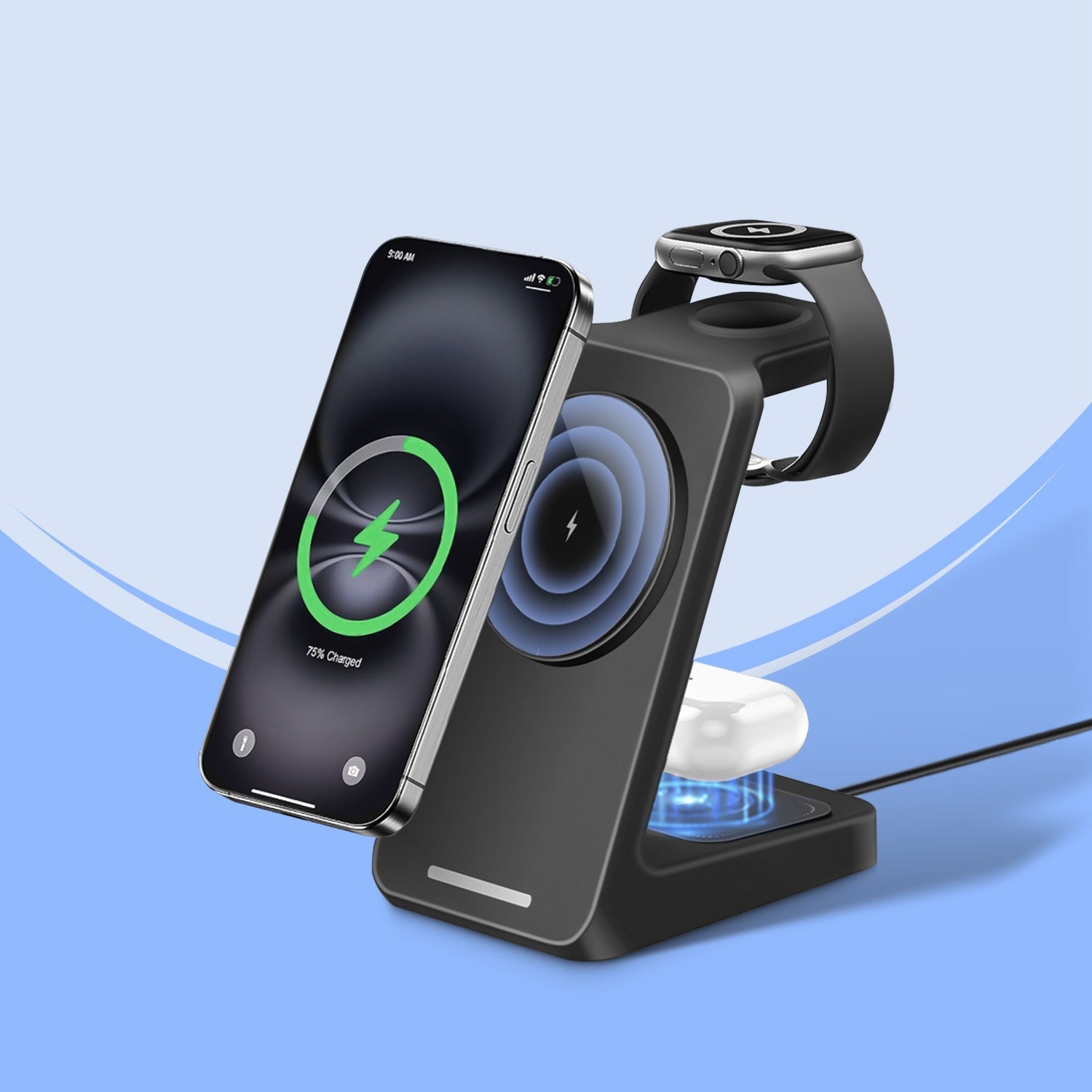
The Future of Power: How Wireless Charging Technology is Transforming Our Lives
The future of power is rapidly evolving, and one of the most exciting innovations leading this transformation is wireless charging technology. Gone are the days of tangled cords and searching for an outlet as the demand for seamless integration of technology into our daily lives rises. With advancements such as resonant inductive coupling and magnetic resonance, devices can now charge efficiently from a distance, offering convenience and reducing the clutter of charging cables. As more manufacturers adopt this technology into smartphones, laptops, and electric vehicles, we can expect an entirely new ecosystem where connectivity and power flow effortlessly.
Moreover, the implications of wireless charging extend beyond mere convenience. Imagine public spaces equipped with wireless charging pads, allowing us to recharge our devices while we work, eat, or socialize. This innovation not only enhances user experience but also promotes sustainability by encouraging the use of renewable energy sources in charging infrastructure. Businesses are increasingly recognizing the potential of wireless charging to boost customer satisfaction and engagement, further solidifying its role in shaping the future of power. As we look ahead, embracing this technology could lead to a more connected, efficient, and eco-friendly world.
Counter-Strike is a highly popular first-person shooter game that pits two teams against each other: the Terrorists and the Counter-Terrorists. Players can choose from a variety of weapons and tactical gear, contributing to strategic team play and individual skill development. The game has spawned several versions, including Counter-Strike: Global Offensive, which has solidified its status in the esports arena. You can also check out Top 10 Thin Silicone Cases for AirPods for some great accessories to complement your gaming setup.
The Science Behind Wireless Charging: How It Works and Why It's Efficient
The science behind wireless charging is rooted in the principles of electromagnetic induction, which allows energy to be transferred from one device to another without the need for direct contact. This process typically involves two coils: a transmitter coil located in the charging pad and a receiver coil within the device being charged. When the transmitter coil generates an alternating magnetic field, the receiver coil captures this energy and converts it back into electrical current to charge the device's battery. This method, commonly known as inductive charging, is both efficient and convenient, minimizing wear and tear on charging ports while ensuring that users can simply place their devices on a pad to recharge.
In addition to its convenience, wireless charging is often more efficient than traditional charging methods. Researchers have made significant advancements to reduce energy losses that typically occur during the power transfer process. For instance, resonant inductive coupling enhances efficiency by allowing the transmitter and receiver coils to be misaligned while still effectively transferring energy. Furthermore, many modern wireless chargers use smart technology to optimize power flow, conserving energy and prolonging battery life. This blend of efficiency and technology is why more consumers are embracing wireless charging as a preferred method for powering their devices.
Is Wireless Charging Safe? Debunking Myths and Misconceptions
When it comes to wireless charging, safety is a common concern among consumers. Many people worry that the technology might harm their devices or pose health risks. However, credible research has consistently shown that wireless charging is safe for both your electronics and your health. The process uses electromagnetic fields to transfer energy from the charger to the device, which is a similar concept to how microwaves operate. Importantly, these fields are well below the safety limits established by authorities like the World Health Organization (WHO). Thus, the idea that wireless charging poses a significant hazard is largely a myth.
Another misconception about wireless charging is that it leads to overheating and battery damage. While it is true that any charging method can generate some heat, the latest wireless charging technologies have incorporated safety features like temperature control to mitigate this issue. Modern chargers are designed to stop the power flow if they detect excessive heat, ensuring that your device remains protected. To maximize safety and efficiency, it's advisable to use chargers from reputable manufacturers and to keep the charging area clean and free of foreign objects. This helps debunk the myth that all wireless charging solutions are inherently unsafe or damaging to your device.